
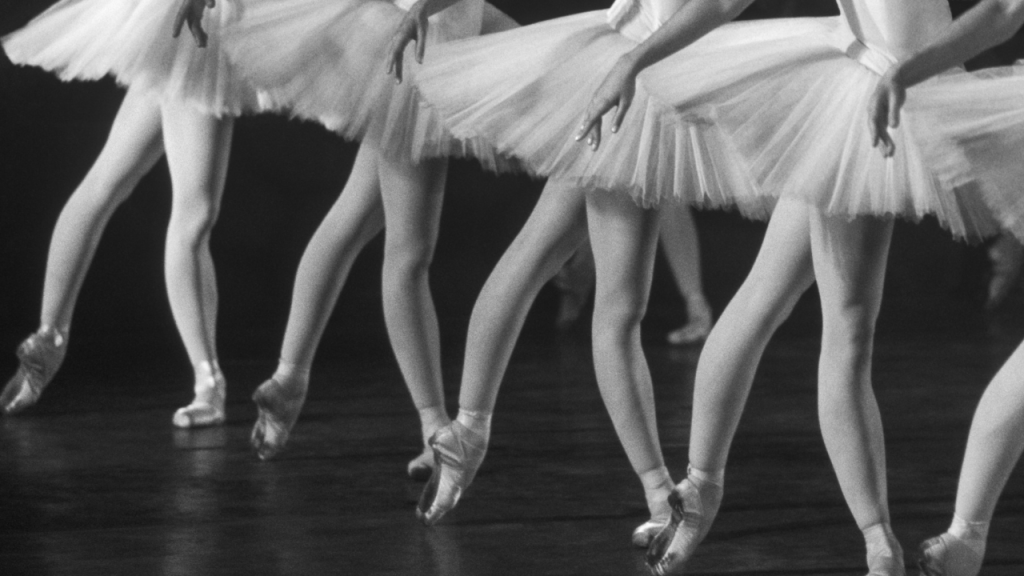
Read Practice Powerhouse Parts One & Two
Grab the Practice Powerhouse 6-step guide for a stronger core here.
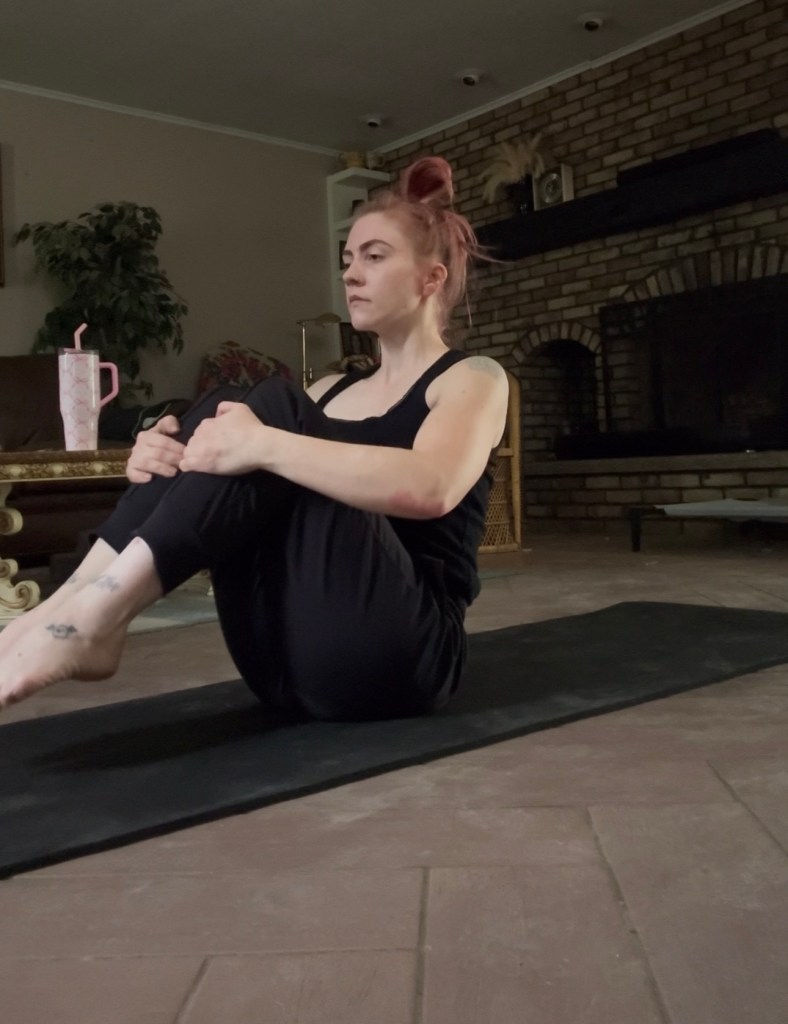
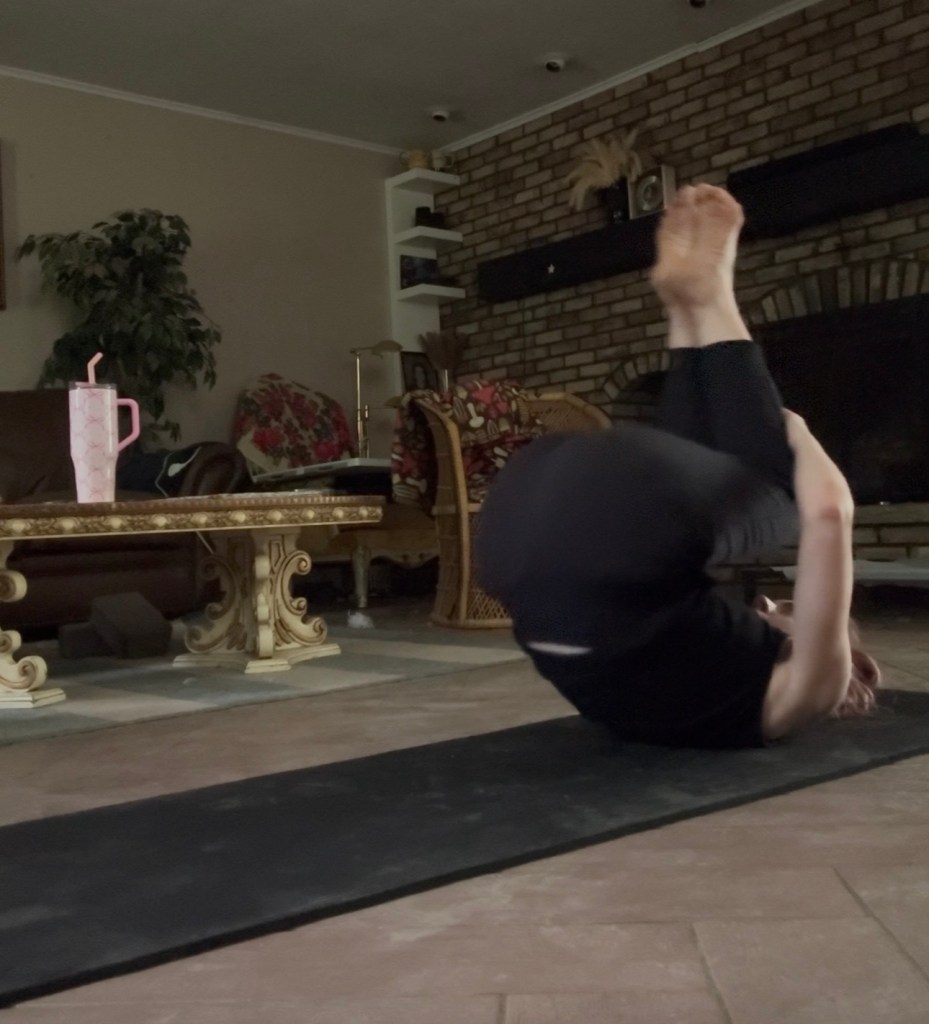
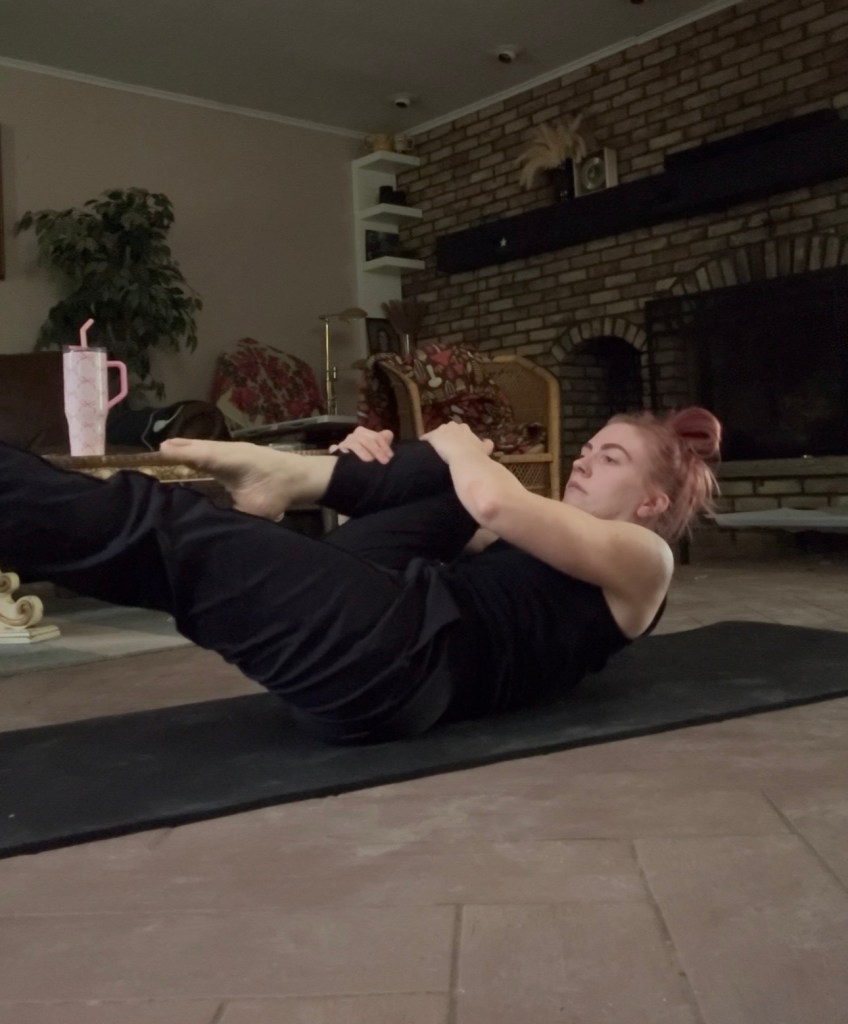
You’re probably looking at one of the above photos and thinking to yourself, “is it really necessary??”
Although it could feel a little silly if it’s your first time trying Rolling Back, trust that it is a lovely move in the morning when the body is still getting used to movement, or at night after a long, busy day! Lovely because it really is a massage-like feeling when performed correctly, yet playful and totally unserious. Connect with your inner child and play a little!
To prepare for Rolling Back, sit tall on a padded surface with knees bent; think of the silk ribbon from part two – long and strong, not crumpled and frayed. Find the sturdiness in your core, and stay engaged through the roll back. Inhale to prepare. Think of every vertebrae as you- starting from your tailbone – gently roll back, only rolling to the bottom edge of your shoulder blades, then roll back to start. Notice how your body wiggles as it finds stability – it feels kind of like the wobbles in relevé, right? This is a different way to work on that stabilization.
We’ll work on stabilizing in Single Leg Stretch too, but the focus is really on the stretching and lengthening of the legs in this one. That sounds beneficial for ballet doesn’t it? Single Leg Stretch is supposed to be performed with pointed toes and technically without turning out – but I do a little of both, with and without turnout.
Coming from Rolling Back, if we end in the upright position, we can transition smoothly to Single Leg Stretch by using control in the core. Slowly lie back while pulling one knee to the chest and extending the other leg straight – toes pointing towards the sky. We’ll keep the extended leg straight up like this in this version, for now, while we keep super focused on how the core feels. My point in all of this is to help you find the MIND + BODY connection. We’re not just going through the moves, we’re finding purpose behind each move. Alternate the bent and extended legs, with control, thinking about lengthening the long leg, reaching your toes to try to touch the sky, gently pushing your muscles to lengthen, and engage to grow stronger. As we progress we’ll lower the extended leg so it reaches forward, but only when you can feel the connection in the lower abs (very important!).
So then we put it all together from the beginning.
With fluidity and control, we start by lying on the mat and connecting to our breath. Only the breath. Not the noise around you. Not the to-do list for the day. Only the inhale that tickles your nose on the way in through the nostrils, and the clearing exhales that takes a little bit of the pressure off our shoulders. Move slowly through each movement thinking of how each move connects you to your pirouette or plié. Not every workout has to leave you breathless and sweaty. Classical Pilates can help you stand strong and confidently in practice and on stage without depleting your energy.
So what’s next?
The benefits are obvious every time I do Pilates before I head to ballet class, my posture feels amazing and I know my muscles are warm and ready for the real work. I want you to feel the difference too!
I have lots of ideas buzzing around my brain on how to share more of how I’m using Pilates to help my Ballet practice, but I’m unsure exactly what that will look like at this very moment- Video series? Technical manual? Group starts? I’m not sure!
Let me know how you’d want to dive into this kind of info by commenting below, and join the wait-list to be one of the first to know about new programming coming soon!
What’s something you want to improve in your ballet practice?


Leave a Reply